Nepal Demands Climate Compensation From China, India and the US After Deadly Himalayan Floods
Nepal has asked China, India and the US to pay climate compensation after flash floods killed 1,114 people and left thousands missing near the Tibet border.
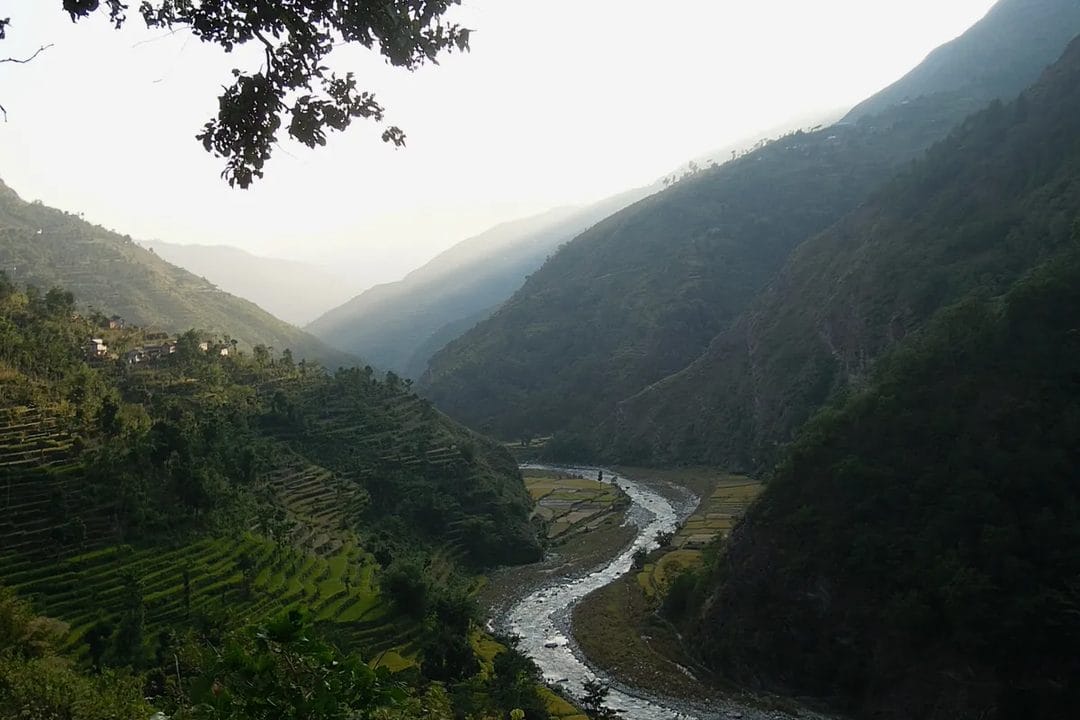
Nepal has formally asked China, India and the United States to pay climate compensation after flash floods killed 1,114 people and left nearly 4,000 others missing, Foreign Minister Shisir Khanal said this week. The floods struck the Bhotekoshi River basin on August 26, triggered by a rock and ice collapse near the Nepal-Tibet border that Kathmandu has labelled a "Himalayan Tsunami."
The disaster tore through Rasuwa, Nuwakot and Dhading districts in Bagmati province, destroying homes, bridges and hydropower infrastructure across a stretch of the Himalayan foothills. Speaking to Kantipur TV, Khanal said smaller nations are "enduring the price" of emissions produced overwhelmingly elsewhere, and that Nepal "must turn this into a matter of justice." He added that the government would "raise this matter explicitly and forcefully" on international platforms in the coming weeks.
A formal claim to the Loss and Damage Fund
Beyond the public demand aimed at Beijing, New Delhi and Washington, Nepal has taken a concrete procedural step: Finance Minister Swarnim Wagle and Forests and Agriculture Minister Geeta Chaudhary co-signed a letter to the board of the UN's Fund for Responding to Loss and Damage, the mechanism agreed at COP27 in 2022 and made operational at COP28. The letter argues that waiting for the fund's scheduled December board meeting would be too late, given that domestic resources are already insufficient to cover the scale of destruction.
Nepal contributes a negligible share of global greenhouse gas emissions, a point Khanal raised directly in linking the flood damage to the country's minimal historical contribution to warming. In effect, the argument mirrors the case smaller, low-emitting states have made at successive UN climate conferences: that funding for climate-driven disasters should be treated as an obligation tied to emissions history, not as discretionary aid.
Diplomatic push timed to the UN calendar
Nepal is weighing whether to send Prime Minister Balen Shah to the United Nations General Assembly, which opens on September 8, with the general debate scheduled for the third and fourth weeks of the month. A UNGA appearance would give Kathmandu a global platform to press the compensation claim directly, ahead of the UN's annual climate summit set for November, where loss-and-damage financing is expected to be a central point of contention between wealthier, high-emitting states and vulnerable developing nations.
The Global Campaign to Demand Climate Justice, a coalition describing itself as representing 200 international civil society groups, issued a statement backing Nepal's position, saying the country "cannot reduce the world's emissions on behalf of the polluters." The statement adds pressure on the three named emitters as Nepal seeks to convert a domestic disaster into a test case for how the Loss and Damage Fund handles claims outside its original, event-based design.
Damage still being assessed
Nepali officials have said full economic and non-economic losses from the flood are still being tallied, but the toll already exceeds the government's immediate response capacity. Hydropower assets were among the infrastructure destroyed, compounding the economic disruption in a country that relies heavily on hydroelectric generation for both domestic power and export revenue to India.
The scale of the August 26 event has also renewed scrutiny of the wider Himalayan hazard picture. Nepal's mountains hold dozens of glacial lakes classified as posing outburst risk, and scientists tracking the region have described the current pace of Himalayan ice loss as far higher than at any point in recent centuries. Consequently, that backdrop is shaping how Kathmandu frames its request: not as aid for a single, unusual catastrophe, but as recurring support for a hazard that is becoming a structural feature of the country's geography.
No response from the Loss and Damage Fund board had been made public at the time of Khanal's remarks. Its next scheduled meeting remains in December, which Nepal's letter describes as too distant given the current scale of displacement and infrastructure loss across Bagmati province.