China, India and Japan Tighten EV Battery Recycling Rules as Asia's Waste Volumes Outpace Capacity
China, India and Japan are rolling out new EV battery recycling rules in 2026, even as a NITI Aayog report shows India's recycling capacity already outpaces its actual battery waste.
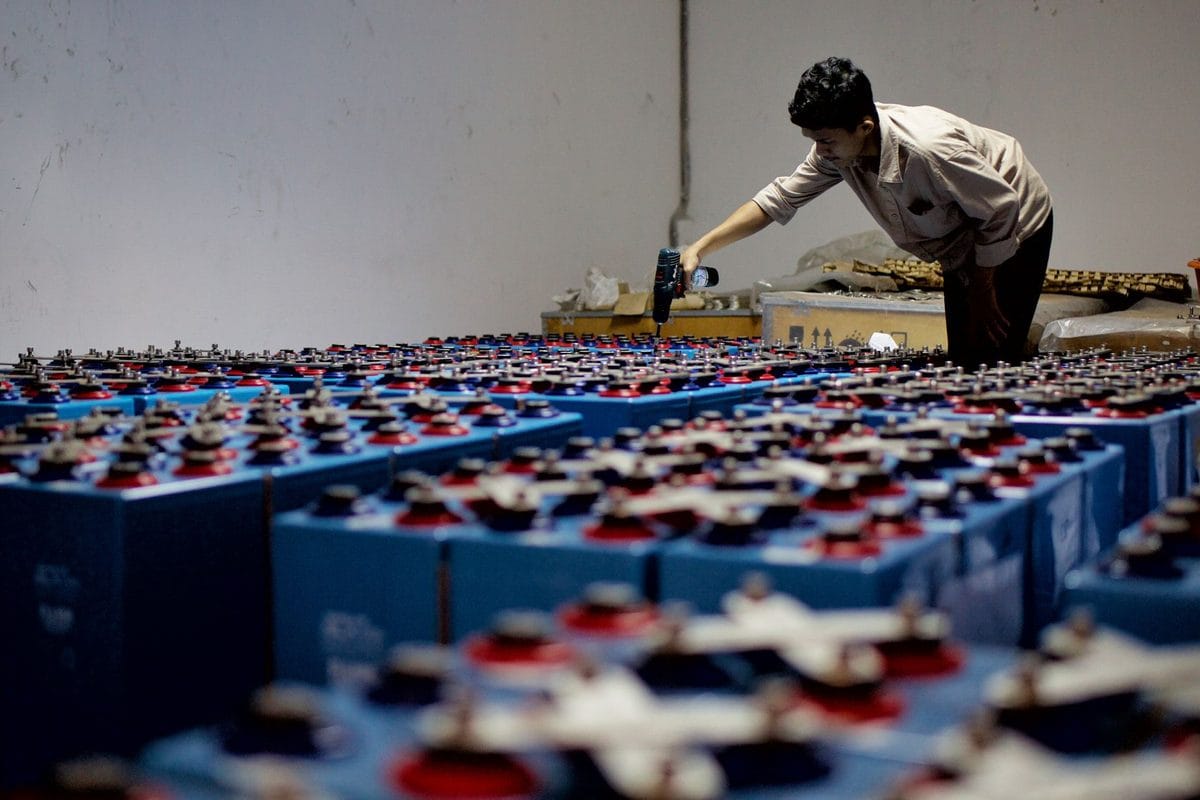
China's Ministry of Industry and Information Technology, together with four other central government agencies, issued new rules governing the recycling of electric-vehicle power batteries on December 31, 2025, with the measures taking effect April 1, 2026. The move comes as India's Central Pollution Control Board enforces sharper material-recovery targets under its own battery waste rules, and as Japan prepares a parallel law for the fiscal year ahead. Together, the three sets of rules mark the most coordinated regulatory push yet on a question Asian governments have mostly left to the market until now: what happens to a battery once the vehicle or device around it is scrapped.
China Sets an April Deadline for Battery Traceability
Under the Interim Measures for the Administration of Recycling and Comprehensive Utilization of Spent Power Batteries from New Energy Vehicles, manufacturers and importers of NEVs and power batteries now carry extended producer responsibility obligations for the batteries they put on the road. The rules also introduce a "simultaneous scrapping system," under which a battery must be scrapped together with its vehicle rather than pulled out and resold outside authorized channels, alongside a national digital battery-ID platform meant to track a cell from installation through disposal.
More than 16 million new-energy vehicles were sold in China in 2025 alone, and researchers cited in the rulemaking project the country's annual volume of spent power batteries will exceed 1 million tonnes a year by 2030 — the scale that pushed five ministries to write a single unified rulebook rather than leave enforcement split across departments.
India's Recycling Capacity Already Outstrips Its Battery Waste
India's Battery Waste Management Rules, first issued in 2022 and amended in 2025, set phased recovery targets enforced by the Central Pollution Control Board: 70 percent material recovery for portable and electric-vehicle batteries in the 2024-25 fiscal year, rising to 80 percent in 2025-26 and 90 percent from 2026-27 onward, with automotive and industrial batteries held to a 60 percent target over the same period. The 2025 amendments added mandatory digital barcode labeling and a public CPCB registry with an online credit system for tracking compliance.
According to a NITI Aayog report published in January 2026, India faces the opposite problem to China's: more than 80 kilotonnes of announced lithium-ion battery recycling capacity already exist against an estimated 15 kilotonnes of end-of-life battery supply that actually needed processing in 2025. The gap is expected to persist through 2030, when announced capacity is projected to reach 115 kilotonnes against roughly 60 kilotonnes of real supply, the report found.
Japan and South Korea Move on Different Timelines
Japan's Ministry of Economy, Trade and Industry is preparing a policy, expected to take effect in fiscal year 2026, that would designate mobile batteries, portable power banks, and heated-tobacco and e-cigarette devices as "specified recyclable items." Manufacturers and importers would be required to collect and recycle these products in cooperation with local authorities, extending Japan's existing recycling framework to a newer category of battery-powered goods.
South Korea, meanwhile, has leaned on research rather than a single sweeping law. The Korea Institute of Energy Research says it has developed a "galvanic corrosion" process capable of restoring spent battery cathodes to their original capacity at room temperature and pressure, an alternative to the hydrometallurgical methods that dominate commercial recycling today. Seoul is also phasing in disclosure rules for battery carbon footprints and minimum recycled-content requirements for cobalt, lithium, nickel and lead, with the strictest thresholds not arriving until 2030 and 2035.
A Region Still Recycling a Small Share of Its Waste
The new rules land against a backdrop the region's own data make hard to ignore. Asia's average formal e-waste collection and recycling rate stands at roughly 11.8 percent, according to the Global E-Waste Monitor, compared with 42.8 percent in Europe and 30 percent in the Americas — even as Asia-Pacific accounted for close to 45 percent of the global e-waste management market in 2025, according to Fortune Business Insights.